

How to Use a Digital Moisture Meter for Reliable Material Checks


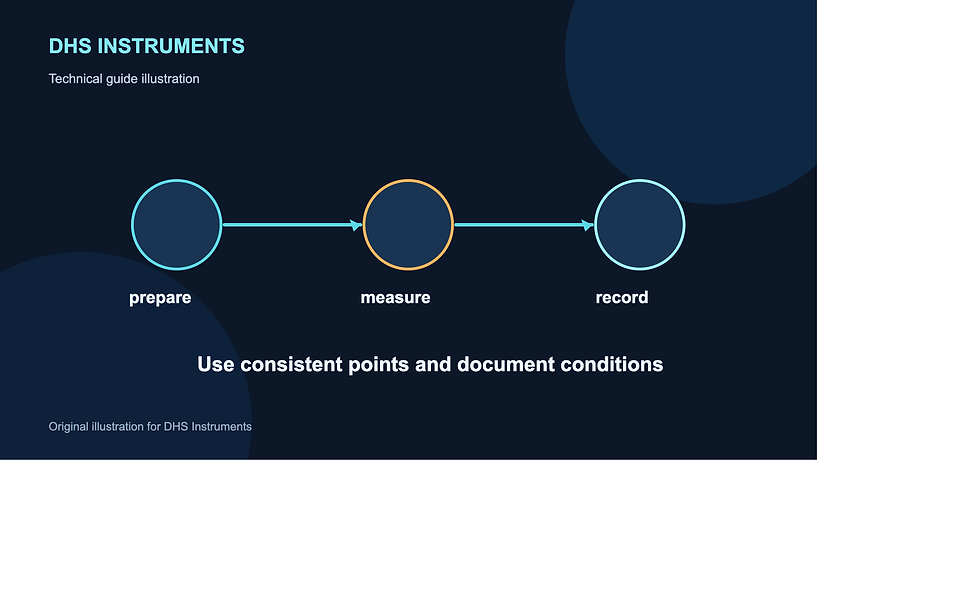
Short answer: Use a digital moisture meter by matching it to the material and measurement method, preparing a representative test area or sample, checking the instrument against the correct reference, taking several consistent readings, and recording the material, temperature, location, units, and result. A moisture meter does not give a universal answer for every material.
Moisture checks are used in building inspection, woodworking, paper, agriculture, food, storage, and manufacturing. Each application has different measurement needs. A meter calibrated for one material may not provide a valid percentage for another, even when the display looks similar.
What does a digital moisture meter measure?
A moisture meter estimates moisture content or a moisture-related signal using a sensor and a material-specific response. Some instruments use electrical resistance, capacitance, radio-frequency, or another method. Pin meters contact or penetrate the material, while pinless instruments sense a larger area without leaving pin marks. The exact method must be confirmed for the selected model.
Many meters display a percentage, but the number may be material-specific, relative, or an instrument scale. A displayed percent is not automatically comparable with oven-drying, laboratory, or relative-humidity results. Read the manual and state the measurement basis in the report.
Choose the meter by material
Material or use | Selection question |
Wood | Does the meter support the species, density, temperature, and expected moisture range? |
Concrete and building materials | Is the result a screening indication or a compliance measurement such as in-situ RH? |
Paper or fiber | Does the method match the sheet, bale, stack, or production process? |
Grain or seed | Is the instrument calibrated for the grain, sample temperature, and trade requirement? |
Why material calibration matters
Electrical and dielectric properties vary with species, density, temperature, salt, chemical composition, orientation, and structure. A meter may need a material setting or correction table. Using the wrong setting can create a consistent but incorrect result.
When a material is not listed, do not assume the closest label is valid. Ask the supplier whether the meter supports the material and whether an application calibration is available. For a new product or process, compare the meter against a reference method before using it for acceptance.
Pin and pinless methods
Pin meters use electrodes to estimate resistance or another property between contacts. They can provide information at the pin depth and may support insulated probes or different depths. The pins leave marks and readings can vary with contact, grain direction, surface coating, and local defects.
Pinless meters scan without puncturing the surface and can cover a larger area quickly. They may be influenced by thickness, density, metal, air gaps, edges, and objects beneath the surface. Pinless readings are often useful for screening and locating variation, but the exact capability is product-specific.
Prepare the measurement
Identify the material, batch, location, and expected condition.
Allow the material and instrument to reach the stated operating temperature.
Remove surface water, dirt, dust, or contamination that could affect contact.
Check for metal, voids, coatings, edges, fasteners, and layered construction.
Select the material setting, depth, probe, and units.
Verify the meter on the correct reference or check procedure.
Preparation is especially important when moisture is uneven. A damp surface may not represent the internal material. A dry surface may hide moisture behind a coating or below the sensor depth. State whether the inspection is surface screening, a spot measurement, or a sample-based moisture estimate.
Take representative readings
Moisture can vary across a wall, board, stack, grain lot, or production batch. Use a defined grid, sample pattern, or route. Take multiple readings and record the highest, lowest, average, or distribution required by the decision. Do not move the meter until the measurement cycle is complete.
For wood, consider grain direction, thickness, temperature, species, and the location of knots or end grain. For building materials, consider slab depth, surface finish, salts, and whether the meter is screening or compliance evidence. For paper or grain, mix or sample according to the relevant procedure so the measured portion represents the lot.
Temperature and environment
Temperature affects many moisture measurement methods. Allow the material and instrument to stabilize and follow the manufacturer's temperature compensation or correction process. Record the temperature when it matters.
Humidity, condensation, surface water, dust, and electromagnetic interference can also affect readings. Keep the sensor clean and protect it from drops or contamination. If the instrument is used near transmitters, motors, or other electrical sources, follow the manual's environmental guidance.
Grain and trade measurements
Grain moisture is a controlled measurement area. NIST and USDA materials describe reference methods, transfer standards, sample conditions, and operating requirements for commercial grain moisture meters. A general digital moisture meter should not be represented as legal-for-trade equipment without the appropriate approval and calibration.
If the measurement affects price, storage, acceptance, or trade, use the required meter, sample preparation, reference method, and jurisdictional rules. Record the grain or seed type, sample condition, temperature, number of measurements, and the approved procedure.
Building and concrete checks
Handheld moisture meters can help locate relative variation in building materials and identify areas that need further investigation. They may not replace an in-situ relative humidity test or another compliance method required for flooring or construction acceptance. The result should be labelled as screening, comparative, or compliance evidence.
For a building inspection, use a map or photograph and record the wall, floor, room, height, surface finish, and nearby sources of moisture. Compare dry and suspect areas using the same setting. A single number without location and material context is difficult to act on.
Using a digital moisture meter
Evaluate the display, material settings, probe or sensor, depth, range, resolution, memory, battery, temperature compensation, calibration check, and data export. Ask whether the meter gives absolute moisture content, relative readings, or a material-specific estimate.
DHS Instruments lists a digital moisture meter with LCD display. Confirm the intended material, measurement method, range, accuracy conditions, probe, and accessories before purchase. Do not rely on a generic moisture percentage until the application has been confirmed.
Reporting table
Record | Why it matters |
Material | The calibration and interpretation depend on the material. |
Location | Moisture is often uneven; location makes readings comparable. |
Method | Pin, pinless, depth, setting, and units explain the result. |
Conditions | Temperature, surface, sample preparation, and time affect measurement. |
Common mistakes
Using the wrong material setting
The meter may show a plausible number even when calibration is wrong.
Measuring only the visible surface
Surface moisture and internal moisture can be different.
Taking one reading
Variation requires a defined pattern and multiple measurements.
Ignoring temperature
Temperature can affect the response and the interpretation.
Calling a screening reading a compliance result
Use the test method required by the specification or jurisdiction.
Design a moisture inspection plan
Start by writing the decision the measurement must support. The decision may be to release timber, locate a building leak, screen a concrete slab, check paper before converting, monitor stored grain, or compare a production batch. Each decision needs a different sample plan and acceptance rule. A meter selected for quick screening may not be suitable for release or trade.
Define the measurement area, number of points, sample size, material setting, temperature range, and action for a high reading. Use a sketch, grid, or route so the operator can return to the same locations. If the material is stacked, sample the outside and inside positions required by the procedure. If the sample changes during transport, record the container and time.
For wood and building materials, compare suspect areas with a known dry or reference area using the same orientation and settings. Relative differences can help locate a problem, but they do not automatically provide an absolute moisture percentage. If the result will approve an installation, use the method required by the manufacturer or project specification.
For paper, grain, or other bulk products, sampling is critical. A few convenient pieces may not represent the lot. Follow the process that defines mixing, sample size, temperature, conditioning, and repeat measurements. For commercial grain measurement, use approved equipment and official reference procedures where required. NIST guidance emphasizes transfer standards, repeated measurements, and the relationship between field instruments and reference methods.
Keep the instrument clean. Material accumulation, dust, moisture film, and damaged sensors can change readings. Store the meter in its case and protect the sensor from impact. Check the battery and display before a route. If the device has a calibration check or reference mode, use it at the start and end of the work where the quality system requires.
When a result is surprising, repeat the reading at the same location, then compare nearby points. Check the material setting, temperature, sensor contact, depth, surface condition, and possible metal or voids. Preserve the original value and the repeat value. A changed result is information about repeatability, not permission to delete the first reading.
For supplier selection, ask which materials and species are supported, whether correction tables are needed, how the meter handles temperature, what depth is measured, how the sensor is checked, and whether the display value is absolute or relative. Request application confirmation when the material is coated, layered, treated, salted, hot, or unusually dense.
Report the method in enough detail that another person can reproduce it. Include the instrument and model, sensor or pins, material setting, units, temperature, location, sample preparation, number of readings, and decision rule. If the number is a relative index rather than a calibrated moisture content, label it clearly. This prevents a screening value from being copied into a certificate as if it were a laboratory result.
Trend moisture by location and batch when the purpose is process control. A rising trend may indicate storage exposure, packaging failure, a drying problem, condensation, a leak, or a change in raw material. The meter identifies a change; the team still needs to investigate the cause.
When moisture results affect a customer, warranty, or trade transaction, retain the original readings, reference checks, sample identification, and operator record. Use the approved method and do not substitute a general-purpose meter without written confirmation.
That discipline makes the final reading easier to review and less likely to be misinterpreted.
Use the same material names and location codes in the field sheet and final report.
This preserves traceability across every measurement.
It supports clearer decisions.
It also improves handover.
FAQs
Are digital moisture meters accurate?
Accuracy depends on the material, method, calibration, temperature, sensor, range, and measurement procedure. Confirm the conditions for the selected model.
Can one meter measure wood, concrete, and grain?
Some instruments support multiple applications, but each material needs confirmed calibration and a suitable method. Do not assume one setting works for all materials.
Should I use a pin or pinless meter?
Choose pin when depth or contact measurement is important and marks are acceptable. Choose pinless when non-destructive area screening is more important. Confirm the product-specific design.
Why do readings change across one board or wall?
Moisture can vary because of grain, density, thickness, joints, leaks, coatings, temperature, and local conditions.
Can a moisture meter prove a floor is ready for installation?
Not always. Some flooring decisions require a defined concrete relative-humidity or other test method. Treat a handheld meter as screening unless the specification says otherwise.
What should I send to a supplier?
Provide the material, expected range, temperature, sample or surface condition, required method, application, reporting, and whether the result affects trade or compliance.
Summary
A digital moisture meter is useful when the material, calibration, sampling, and interpretation are controlled. Match the meter to the application, use the correct setting, take representative readings, record conditions, and distinguish screening from compliance testing.
Useful Sources And Verification
Verify the current model manual, material calibration, range, reference method, and intended-use limitations before purchase.



Comments